What Happens When Parents Reset Too: Modeling Digital Wellness at Home

Christian Dominique
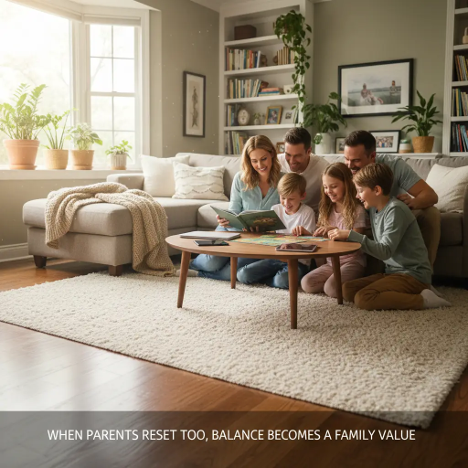
What Happens When Parents Reset Too: Modeling Digital Wellness at Home
Screens have become lullabies at bedtime and the soundtrack to dinner. We worry about our kids’ screen time, yet we forget that they copy our habits. When parents reset their digital habits, we show that balance is a family value. This article explains why your example matters, what research says about the ripple effects of adult screen use, and how a shared reset can change the energy in your home. A free Digital Reset invitation awaits at the end. Children mirror adult habits Kids copy what they see. When adults habitually reach for devices, children learn that this is normal; when adults set technology aside, children do the same. Research on more than 10,000 preteens found that parents who use devices in front of their children or allow screens during meals are more likely to have kids watch R‑rated movies or play violent games. Parents who set clear rules and monitor content reduce this risk. Lead researcher Jason Nagata said children model their screen habits after their parents. Modeling is not about perfection but about consistency: demonstrating that technology has a place in our lives without becoming the centre of it. How parents’ resets influence kids’ digital wellness It is tempting to address children’s screen time by focusing exclusively on them. Yet research suggests that interventions are more effective when the whole family participates. When parents commit to their own digital detox or reset, children see that the rules apply to everyone. They no longer perceive limits as arbitrary control but as a shared commitment to well‑being.
Resetting as a parent accomplishes two important things:
- It brings awareness and clarity. By monitoring our own screen time we become aware of how often we check devices for no reason and why we reach for them. This awareness reduces hypocrisy (“do as I say, not as I do”) and replaces it with empathy. It also clarifies whether an email or notification truly requires attention or if we are responding out of habit. Reflecting on these patterns helps us form intentional media plans that respect both our needs and our children’s developmental stages.
- It fosters empathy and connection. When parents temporarily step away from screens, they have more time to engage. A 2025 digital detox study asked adults to unplug for twenty‑four hours and noted improvements in child care, closer relationships with partners and parents, enhanced communication with neighbours and colleagues, and a sense of calm and peace. These benefits flowed from simply being present rather than distracted. The cascade effect: healthier habits and calmer homes Resetting our own screen habits has a ripple effect. When parents model self‑regulation, children are less likely to develop problematic media use. Device‑free times (during meals, before bedtime, or while traveling) support sleep, conversation and creativity. Turning off notifications and putting devices out of sight reduces background stress and allows everyone to settle into calmer states. Participants in the digital detox study reported better sleep, more leisure activities such as reading and exercising, and a general feeling of refreshment, which signals that joy exists beyond screens. This shift also fosters mindfulness by encouraging each family member to notice their own triggers and make deliberate choices rather than acting on autopilot.
Practical steps for modeling digital wellness
- Conduct a personal audit Notice when and why you pick up your phone. Share those insights with your children to show that everyone is working on healthier habits. Self‑awareness is the foundation of change, and modeling it to your kids shows vulnerability and growth.
- Establish shared rules Create a family media plan that outlines where and when devices are allowed. Involve your children in setting the rules and explain why bedrooms and mealtimes are screen‑free. Follow the same guidelines yourself to show that limits stem from care rather than control. Revisit the plan regularly and adapt as your children grow and technology evolves.
- Replace screen time with connection Plan screen‑free activities you can enjoy together, such as cooking, walking, games or reading. People who completed a digital detox found time for hobbies they had neglected, like gardening. Prioritizing shared experiences over individual screen time reinforces that connection is more fulfilling than scrolling.
- Set an example during emotional moments When boredom or stress hits, resist the urge to escape into a device. Take a breath, stretch or step outside instead. Explain to your children what you’re doing so they see a healthy coping strategy in action.
A gentle invitation
Modeling digital wellness is not easy, especially when work, social life and entertainment are intertwined with our phones. Yet the rewards are significant: deeper connection with your children, reduced stress, improved mental clarity and a home that feels less chaotic. At AWE Digital Wellness, we believe that meaningful change starts with awareness and community. Our free Digital Reset is designed to help families step back from digital overload and rebuild healthy habits. It includes interactive workshops, guided reflections and a supportive community committed to reclaiming calm. During the reset, you’ll explore the psychological underpinnings of screen habits, learn practical strategies to pause before picking up a device, and find creative ways to connect offline. You will also have opportunities to share experiences with other parents, learning from each other’s successes and challenges. Most importantly, you will emerge with a plan tailored to your family’s values and rhythms. If you’re ready to experience the benefits described in the research and re‑establish a balanced relationship with technology, join us for the next session. [Insert link to the free Digital Reset here]. By resetting together, parents show their children that digital wellness is a shared journey. Your example has the power to shape how the next generation approaches technology with curiosity, confidence and respect. Let’s reclaim our homes as spaces of presence and peace. Remember that change comes gradually. Small daily choices to set devices aside accumulate into lifelong habits that your children will carry forward.