Your Child’s First Phone: A Conversation, Not a Transaction

Christian Dominique
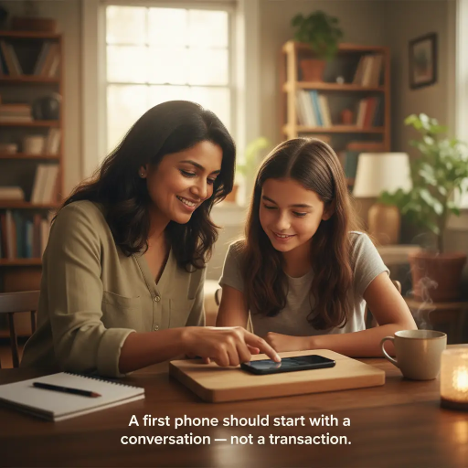
Your Child’s First Phone: A Conversation, Not a Transaction
Introduction: more than a rite of passage
For many children, getting a first phone is a moment of pride. It signals trust, independence and a feeling of being grown up. For parents, it can feel like the day their little one enters a vast digital universe. Deciding when to give a child a phone is no longer just about finances or following a trend; it involves reflecting on family values and the kind of relationship you want your child to have with technology. As a parent and someone who coaches many parents and families, I see this milestone not only as a consumer choice but as a teaching moment. With the right approach, it can strengthen communication, reinforce boundaries and set the stage for healthier digital habits.
The pressure to keep up
Smartphones have become omnipresent. Children see their friends texting, gaming or streaming and ask, “When will it be my turn?” Social pressure, safety concerns and busy schedules push parents to consider a phone earlier than they might feel comfortable. Research shows there is no single “right” age; readiness depends on the child’s maturity, ability to follow rules and the family’s values. In a recent survey of parents, 45 percent said ages 12–14 were appropriate for a smartphone, 16 percent favoured ages 9–11, and 28 percent thought ages 15–17 were best. Other data reveal how quickly phone ownership has moved downward: in 2015, only 11 percent of 8‑year‑olds had a phone, but by 2021 that number had grown to 30 percent. For older teens, ownership climbs to nearly 90 percent. These statistics highlight the accelerating pace at which children expect and receive phones. Parents often feel caught between wanting to protect their children and wanting them to fit in. They worry about missing calls from sports coaches or after‑school programs. Many parents see a phone as a lifeline in emergencies. Yet they also know the downsides: distraction during homework, exposure to inappropriate content, peer pressure amplified by social media and the addictive pull of games and apps. Balancing these competing priorities requires intention and an honest conversation with your child.
What the first phone represents
At its core, a phone is a tool for communication. For a child, it is also a symbol of autonomy. When you hand over a device with internet access, you are giving your child a tiny portal to the world — and the world into theirs. This is not just a financial transaction; it is the start of an ongoing dialogue about trust, responsibility and identity. As a therapist, I remind parents that the way you frame this step can either strengthen your connection with your child or create tension. Consider what a phone will be used for. Is it to coordinate pickups after school, stay in touch during a split‑home arrangement or allow your child to join group chats with friends? Talk about these reasons openly. Ask your child why they want a phone. Are they craving inclusion, exploring hobbies, or escaping boredom? Understanding their motivations will help you decide on features and set expectations.
Make readiness a family discussion
Rather than asking, “Are you old enough?” shift the conversation to “Are you ready, and what will readiness look like?” The American Academy of Pediatrics suggests using tools to assess readiness and to tailor decisions to your family’s values. Their PhoneReady Questionnaire, developed in collaboration with AT&T, uses 10 questions to evaluate a child’s behaviour, maturity and family values and offers customised recommendations and next steps for parents. The questionnaire helps you decide whether your child is ready, almost ready or not yet ready for a phone, and provides guidance on parental controls, creating a family media plan and setting up resources for safe and positive phone use. Engaging your child in this assessment turns the moment into a teachable conversation. You can talk about how digital privileges grow with demonstrated responsibility. If the tool suggests your child isn’t ready, you can revisit the question in a few months and use that time to build the skills needed for healthy tech use. Treat the first phone as an experiment: set time limits, check usage together and adjust rules as your child proves they can handle more freedom. The goal is to mentor rather than monitor.
Set clear expectations and boundaries
Once you’ve decided it’s time, outline the responsibilities that come with the phone. Create a written or verbal agreement covering when and where the phone may be used (for example, not at the dinner table or during homework), who your child may communicate with, and how to handle group chats or social media. Discuss privacy and respect: remind them not to share personal information or photos without permission, and to be kind in online interactions. Clarify the consequences for breaking rules. This is not a punitive exercise; it’s a way to teach accountability and build trust. Model the behaviour you expect. Children learn more from what you do than what you say. If you are glued to your screen during conversations, they will mirror that. Show them how you set your own boundaries: leaving your phone at the door when you come home, turning off notifications during family time, or practising a digital detox on weekends. Encourage open communication about what they encounter online. Ask them about the apps they use and the people they interact with. Let them know they can come to you if they see something upsetting or confusing.
Support emotional wellness
We see how devices can become a crutch for managing emotions. When children turn to screens whenever they are bored, anxious or sad, they miss out on learning how to self‑soothe, tolerate frustration and develop resilience. Use the first phone moment to talk about emotional health. Explain that while phones can connect us to friends and information, they can also expose us to criticism and comparisons. Discuss how constant notifications can increase stress and how curated social media feeds can distort reality. Teach your child strategies to cope without a device: taking deep breaths, going for a walk, playing outside or talking to someone. Encourage creative outlets like drawing, music or writing. Let them know that it’s okay to feel left out sometimes and that they don’t need to respond immediately to every message. Normalise taking breaks. For adolescents, talk about how social media can impact self‑esteem and mood, and encourage them to unfollow accounts that make them feel bad.
Choosing the right device: beyond smartphones
When you decide to get a phone, consider starting with a device designed to minimise distractions. At AWE Digital Wellness, we’ve developed phones that prioritise your child’s well‑being. They come with a curated set of essential functions — calls, texts, maps and a few educational apps — and exclude games, social media and app stores. Built‑in time limits and nightly shut‑off features help your child wind down. The interface prompts periodic breathing exercises and encourages them to take breaks, cultivating healthier habits from day one. Unlike many feature phones, AWE phones evolve with your child. As they demonstrate responsible use, you can unlock new capabilities in stages, from photo sharing to curated music. This staged approach mirrors how privileges should be granted in real life: earned through trust. Our devices also integrate seamlessly with our Digital Reset sessions, giving your child access to guided mindfulness practices at the press of a button. Explore the AWE Phone here and see how it can support your family’s values.
Conclusion: from transaction to transformation
Giving your child their first phone doesn’t have to be a one‑time purchase; it can be the beginning of an ongoing conversation about technology, responsibility and well‑being. Use available tools to assess readiness, talk openly about expectations, and model healthy habits yourself. Remember that there is no universal “right age,” only the right approach for your child and your family. By turning the milestone into a dialogue rooted in your values, you teach your child that devices are tools to enrich life, not replace real‑world connections. And when you’re ready to put these ideas into practice, consider a device designed with wellness in mind — one that grows with your child and supports a balanced, calm and connected home.